
7 Best Fraud Prevention Checks for Early Warning

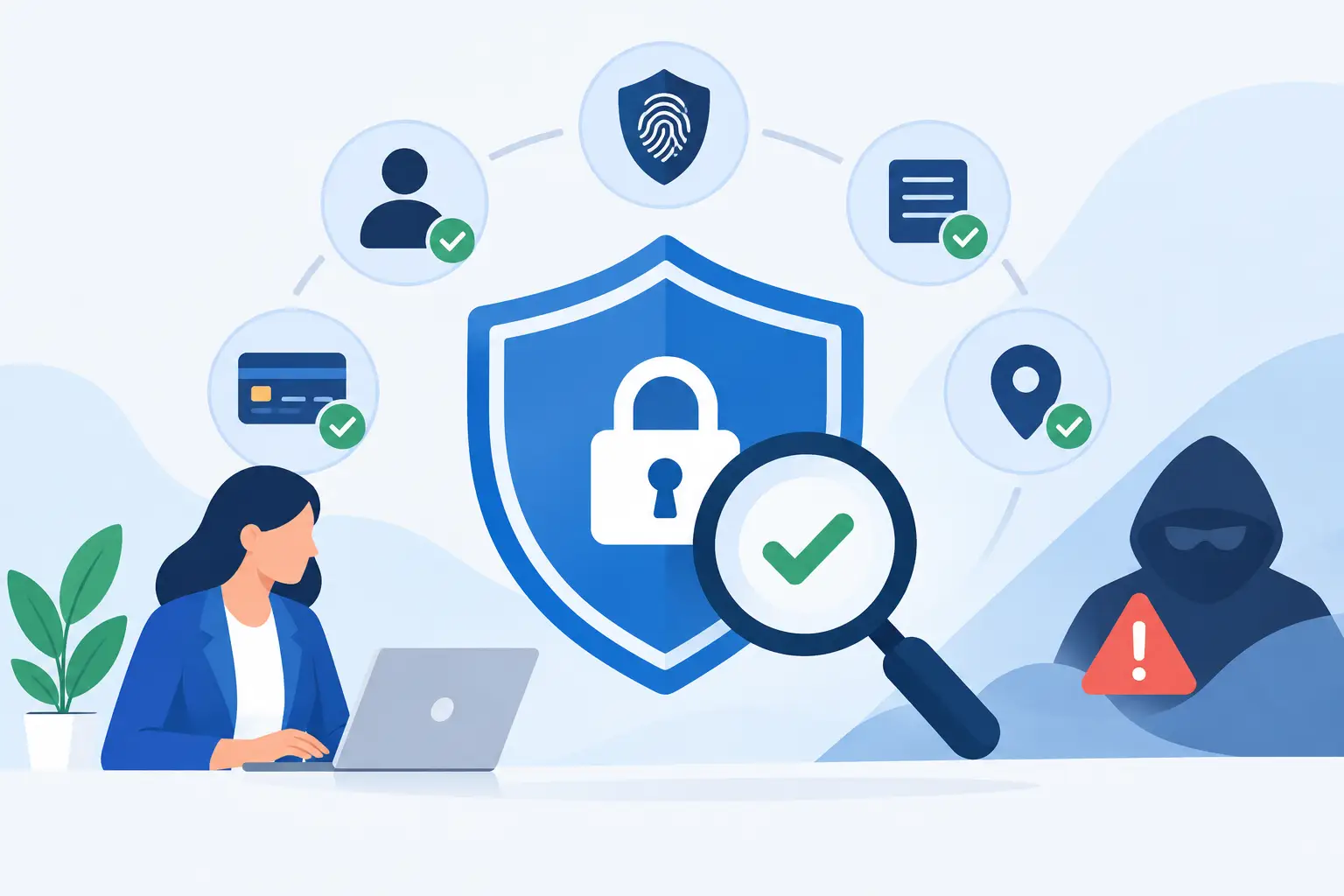
A fraud concern rarely starts with an obvious admission or a single decisive document. More often, it begins with a detail that does not quite fit: a new supplier with limited history, an employee absence pattern, a claim supported by inconsistent information, or a person whose identity cannot be properly verified. The best fraud prevention checks help you identify that risk early, establish the facts discreetly and decide whether further action is justified.
For employers, insurers and private individuals, the objective is not to treat every inconsistency as wrongdoing. It is to apply proportionate checks, protect legitimate people from unfair suspicion and preserve evidence where a concern is real. A well-run process provides clarity before losses, reputational harm or a dispute becomes harder to contain.
1. Verify identity beyond the documents provided
Identity fraud often relies on paperwork that appears convincing at first glance. A passport, driving licence, utility bill or company registration record may be genuine, altered, stolen or being used by someone other than the named individual. Checking a document in isolation is therefore rarely enough.
Compare details across independent sources. Names, addresses, dates, contact details and employment history should make sense together. Look closely at recent address changes, duplicate phone numbers, inconsistent signatures and documents issued unusually close to a claim, transaction or application.
For businesses, enhanced background checks may also establish whether a prospective employee, contractor, director or supplier has the history and associations they claim. For an individual, identity verification can be particularly relevant before entering into a substantial financial arrangement or trusting someone met online.
2. Check the story, not just the form
Fraud frequently survives because each item of information is considered separately. The better question is whether the overall account is plausible.
If an insurance claimant says an item was bought recently, do the receipt, payment record, serial number and reported circumstances support that account? If an employee reports repeated short-notice absence, does the timing align with public activity, secondary employment or other available evidence? If a new supplier requests urgent payment, does the urgency match the commercial relationship?
This does not mean relying on instinct alone. Record the facts, the dates and the source of each concern. A clear chronology can reveal contradictions that a single check will miss, while also showing that your decisions were reasonable and measured.
3. Screen business relationships and payment changes
Supplier and invoice fraud can cause significant losses in a very short time. Criminals may impersonate a known business, take over an email account or submit altered bank details shortly before an invoice falls due. The request can look routine, especially where it refers to an existing order or uses familiar names.
Treat changes to payment details as a separate verification event. Confirm them using an established telephone number or named contact, rather than the number contained in the email requesting the change. Check that the company exists, that its trading address is credible and that its directors, contact details and online presence are consistent with the relationship being proposed.
The same discipline applies to new customers seeking high-value credit, unusually large orders or rapid fulfilment. A commercial opportunity may be genuine, but haste should never replace verification.
4. Review patterns in absence, expenses and claims
One unusual expense claim may be an error. Repeated claims just below approval limits, duplicate receipts, mileage that does not match work locations or spending at implausible times deserve closer scrutiny. Patterns matter because they distinguish an isolated administrative issue from potentially deliberate misconduct.
Employee absenteeism requires the same balanced approach. Employers should avoid assumptions and follow their own policies, but recurring absences connected to weekends, major events, declined leave or reports of incompatible activity can justify a formal review. Where the concern cannot be resolved through internal records, lawful surveillance or a targeted investigation may provide the factual evidence needed to make a fair decision.
For insurers, comparative review of claims can highlight repeated addresses, shared bank details, similar narratives or a history that warrants further enquiry. It is the connection between the data points, rather than any one point, that often reveals the risk.
5. Conduct open-source intelligence checks carefully
Publicly available information can be useful, particularly where a person or business is presenting a version of events that may be inaccurate. Company records, professional profiles, public posts, property information and news coverage can help confirm timelines, associations and trading activity.
However, open-source checks have limits. Profiles may be outdated, copied or controlled by another person. Images can be old, locations can be misleading and social media posts rarely tell the full story. Information should be treated as an investigative lead, not proof by itself.
The key is proportionality. Gather only what is relevant to the issue, retain it securely and avoid intrusive or unlawful methods. In employment, insurance and personal matters alike, evidence must be collected in a manner that can withstand scrutiny.
6. Protect your premises, devices and confidential information
Fraud is not always about false claims or payments. It can involve theft of commercially sensitive information, unauthorised access to systems or covert monitoring of private conversations. Warning signs include unexplained account activity, unfamiliar devices on a network, documents appearing outside their normal circulation or confidential information reaching competitors.
Basic controls remain highly effective: restrict access according to role, review permissions when staff leave or change position, require independent approval for material payments and train staff to question unexpected requests. These measures do not eliminate fraud, but they make it harder for one compromised account or dishonest individual to cause immediate damage.
Where there is a credible concern that offices, vehicles or meeting spaces are being monitored, a professional technical surveillance counter-measures inspection can establish whether covert devices are present. Guesswork can compromise an investigation, so any suspected device should be handled carefully and not simply removed without advice.
7. Know when to move from prevention to investigation
The best fraud prevention checks are designed to give an early warning. They are not a substitute for a proper investigation when evidence points to a serious issue. Once concerns reach that stage, informal enquiries, confrontation or poorly managed internal questioning can alert the subject and make evidence harder to obtain.
A structured investigation should begin with a defined allegation, a clear scope and a plan for preserving relevant material. This may include reviewing records, tracing assets, confirming a person’s whereabouts, conducting lawful surveillance or obtaining witness accounts. The method depends on the allegation and the evidence already available.
Discretion is central. Employers may need to protect the integrity of a disciplinary process. Insurers may need reliable evidence before challenging a claim. Private clients may need facts before making an emotionally difficult decision. In each case, the aim is the same: establish what happened without overreaching or compromising confidentiality.
Making checks effective without creating friction
Fraud controls fail when they are so cumbersome that people bypass them. They also fail when they are too light-touch to detect obvious anomalies. The right balance depends on the value at risk, the level of access involved and the consequences if the information is wrong.
A low-value routine purchase may need a simple approval process. A new supplier, a high-value payment, an employee with access to sensitive systems or a disputed insurance claim needs more scrutiny. Set clear triggers for enhanced checks so that staff know when to pause, verify and escalate rather than making inconsistent decisions under pressure.
Keep a secure record of the checks completed and the reasons for any decision. That record can protect your organisation if a dispute follows, and it gives an investigator a stronger starting point if concerns later develop.
When an issue is sensitive, speed matters, but so does control. A discreet discussion with an experienced investigation professional can help you decide what should be checked, what evidence may be available and whether a fuller enquiry is warranted. The Lancer Group approaches such matters with the confidentiality and evidential discipline needed to turn suspicion into a clear, practical next step.


Comments